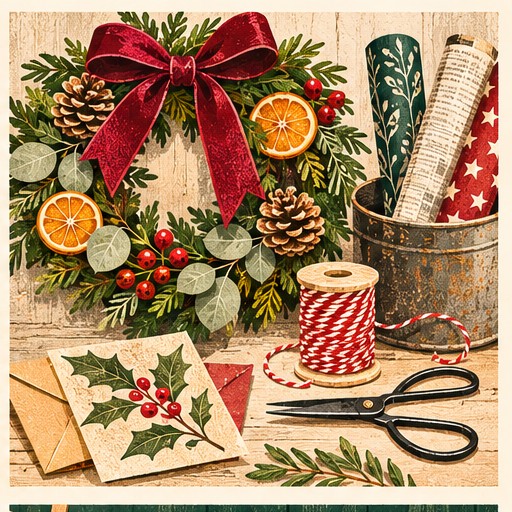
Plan, shop, cook and celebrate beautifully — without spending more than you need to. An illustrated guide with practical tools to help make Christmas simpler.
Reader-testing build · checkout and member access are not yet enabled.
Complete guide £7.99 · One payment, no subscription · Preview only
YOUR ILLUSTRATED CONTENTS
Where would you like to begin?
Choose an illustration to open its section directly.
What the complete guide will include
A little more Christmas. A lot less guesswork.
Recipes, shopping guidance, gift ideas and festive pleasures — organised around tools you can use, rather than another pile of lists to print.
Plan spending, then record what you actually pay.
Keep gift ideas and costs in one place.
Build meal plans and combine ingredients into a shopping list.
Find thoughtful ways to celebrate, with or without a crowd.
Make a gentler financial and culinary start to January.
Reader-testing build: payment and member access must be enabled before public launch.
Why pay for the full guide? The planned product brings recipes, ideas, reliable advice and interactive planners into one mobile-friendly place. This testing build demonstrates the reading experience and core tools; it is not a protected paid edition.
Sample advice from the guide
Different budgets. Same Christmas.
Agree gift expectations before the shopping begins. A spending ceiling isn't a target, and generosity needn't be matched pound for pound. Consider a Secret Santa, children-only gifts or a shared experience.
The last-minute Christmas
Check cupboards and the freezer first. Compare unit prices, delivery charges and return windows. A simpler meal or thoughtful digital experience can be better than a panic purchase.
When shopping goes wrong
Keep your receipt, contact the retailer and distinguish faulty goods from a change of mind. For detailed UK guidance visit Citizens Advice.
Beware the Christmas con
Be wary of unexpected parcel links, fake shops, ticket offers and urgent requests for money. Visit official sites directly and see the NCSC's phishing guidance.
Reference library · additional reading
Browse the original subject library
Explore the articles in this section. Use Back or Home to return.
A Very Good Christmas · Digital guide preview
Explore A Very Good Christmas
Explore ideas, recipes and practical advice for a Christmas that feels generous without costing the earth. Browse by theme or search for exactly what you need.
WELL SPENT · THE COMPLETE GUIDE
The complete Christmas reading guide
A thoughtful way through the money decisions, good food, gifts and small pleasures of Christmas. Read from beginning to end, or jump straight to the chapter you need.
Before you set a budget, write down the three things you most want from Christmas: perhaps a proper meal together, time off, seeing a friend or keeping a family tradition. They are your priorities. The rest is optional, even when the advertising insists otherwise.
Give the money a job
Choose one total you can afford from money you already have. Divide it into gifts, food, travel, decorations and a small contingency. A useful budget is not a list of aspirations: it is a plan that still works when December arrives.
The basket test
Before buying, ask: Will we use it? Do we already own something that works? What is the full cost, including delivery, batteries, accessories or travel? If the answer is uncertain, leave it in the basket overnight.
Make room for different celebrations
Christmas for one can be peaceful and indulgent; Christmas for a crowd can be joyful without being elaborate. Neither needs to imitate the other. Set the table for the people who are actually coming, including yourself.
The five-minute Christmas audit
List the people you hope to see, the meals you genuinely want and the commitments already in the diary. Put a rough price beside each. Then decide what deserves your money before retailers decide for you.
A practical budget buffer
If you can, leave a small unallocated amount for forgotten postage, travel or last-minute ingredients. When something new comes up, move money between categories rather than silently increasing the total.
Thoughtful rather than expensive
Gifts without the performance
Start with the recipient
Notice what they enjoy, what they already have and what they would genuinely use. A second-hand edition of a beloved book can be more personal than a new object chosen at random. Good condition, careful presentation and an honest description matter.
Experiences need to be usable
A theatre ticket, class or membership is only a gift if the recipient can get there, book it and enjoy it. Check travel costs, accessibility, expiry dates, booking restrictions and whether the gift quietly commits them to spending more.
Subscriptions: know what you are giving
A defined three- or six-month gift is often simpler than a recurring charge. Check whether the subscription starts immediately, renews automatically, requires a payment card, includes delivery and can be cancelled easily. Record the cancellation date if you are paying.
Food gifts that earn their place
Shortbread, chutney, spice blends and a favourite cake can feel generous without being extravagant. Check allergies, storage and shelf life; include ingredients and a date when gifting homemade food. Buy rather than make when small batches would leave you with costly unused ingredients.
The useful gift list
Keep a running list of ideas and a maximum price for each person. Include wrapping, postage and any accessories in the total. A good gift does not need to be accompanied by a persuasive explanation of how much it cost.
A subscription is a commitment, not a ribbon
Choose a fixed-term gift when possible. If it renews, note the renewal date, who is responsible for cancelling and whether the recipient must enter card details. An experience with a hidden travel bill is not quite the treat it appears.
The gift that comes with no clutter
Consider a theatre matinee, a favourite walk followed by lunch, a course chosen together or help with a task someone has been putting off. Make it specific enough to be enjoyed, flexible enough to fit real life.
Cook well, waste less
Food for the celebration — and the days around it
Two different kinds of meals
Festive menus belong to the main celebrations. The soups, casseroles, risottos and tray bakes are for the run-up, the quieter days between gatherings and January. They are not substitutes for Christmas dinner unless you want them to be.
Plan from the table backwards
Choose a main course, two or three sides and one dessert before shopping. Check who is coming and what they can eat. Use the menu planner to make a first shopping list, then round quantities to sensible pack sizes and check your cupboards.
The sensible roast
A chicken or vegetarian centrepiece with roast potatoes, seasonal vegetables and gravy is a complete meal. Add extra dishes only if someone will enjoy them. Frozen vegetables, ready-made pastry and shop-bought pudding can all be sensible choices.
Leftovers are ingredients, not obligations
Cool cooked food promptly, refrigerate it and follow safe storage and reheating guidance. Plan a soup, sandwich or pie only for leftovers you expect to have. Do not buy extra food just to produce a leftover recipe.
Make-or-buy without ideology
Compare the cost of the quantity you will actually use, not the theoretical price per portion from a large bag of ingredients. Count your time, fuel, storage and the pleasure of making it. A shop-bought pudding and homemade roast potatoes can coexist happily.
Build the festive menu around the oven
Before choosing six side dishes, work out which items need the oven and at what temperature. Choose one or two sides that can be cooked ahead or finished on the hob. A manageable timetable is worth more than another elaborate garnish.
A small Christmas dinner is still Christmas dinner
For one or two, roast chicken portions, a small vegetarian loaf or a favourite main with roast potatoes, gravy and two vegetables is a celebration. Buy a pudding portion if making a whole pudding would create waste.
An easy plan for the days between
Use soup, risotto, casseroles and tray bakes to return to everyday meals. These are intentionally different from the festive centrepieces; they belong before, between and after the celebrations.
Consumer choices and scams
Shop carefully, celebrate confidently
Start with the seller
A professional-looking advert or website is not proof that a retailer is genuine. Check the website address carefully, independent contact details, delivery terms and returns information. Be especially cautious of unfamiliar sellers promoted through social media.
Beware the countdown clock
A flashing timer or claim that only one item remains is designed to speed up a decision. Compare prices and check the full cost before paying. If a deal disappears while you think, it may not have been the right deal.
Delivery messages and impersonation
Unexpected texts asking for a small redelivery fee can be attempts to steal payment details. Do not use the link in the message. Visit the delivery company through its official website or app and use the tracking information you already have.
Payment choices
Credit and buy-now-pay-later products are not savings. They change when you pay and may create fees, interest or financial difficulty. If borrowing is necessary for an optional purchase, consider a less expensive alternative. Consumer protections vary by payment method and transaction: check current official guidance rather than relying on a slogan.
If something goes wrong
Keep order confirmations, screenshots and messages. Contact the seller or payment provider promptly using verified contact details. If you suspect fraud, contact your bank quickly and use the official reporting route for your part of the UK. Avoid paying anyone who promises to recover stolen money for an upfront fee.
Returning a present: know which rule applies
For most goods bought online from a UK trader, there is generally a 14-day cancellation period after delivery, followed by 14 days to send the item back. Exceptions apply. For an unwanted item bought in a shop, returns generally depend on the retailer’s policy. Faulty goods have separate statutory protections.
When a message looks urgent
Do not follow a payment or delivery link in an unexpected text. Open the service independently using a known website or app. If you have paid a scammer, contact your bank immediately, then use the relevant official reporting service.
Where to get reliable help
For consumer rights, use Citizens Advice or GOV.UK. In England, Wales and Northern Ireland, the national fraud reporting service is now called Report Fraud; in Scotland, contact Police Scotland. These official links are collected below.
A lunch, drinks and nibbles, an afternoon walk or a potluck are all proper invitations. Tell guests what is provided, whether they should bring anything and what time things will finish.
Cook for the number coming
Confirm attendance and dietary needs before shopping. A short menu that you can serve calmly is better than a complicated one that keeps you in the kitchen all day.
Borrow before you buy
Ask to borrow extra chairs, serving dishes, a roasting tin or a folding table. Mismatched plates are rarely a crisis; unnecessary purchases are harder to store in January.
Travel is part of the budget
Include fares, fuel, parking, accommodation and pet care when deciding what is affordable. A kind invitation should not leave someone with an unspoken financial burden.
Keep hospitality human
A tidy bathroom, somewhere to put a coat and a warm welcome do more than elaborate decorations. Guests are there to see you, not to inspect your skirting boards.
Hosting without a second mortgage
Agree whether you are providing a full meal, drinks and snacks or a shared table. Guests can bring a dish when invited to do so, but avoid assuming that everyone has the same budget or free time.
A realistic cooking schedule
Write down what can be made the day before, what needs reheating and what must be served fresh. Check fridge space before buying food in bulk, and keep perishable items chilled until needed.
Small rituals and enjoyable days
Advent without a shopping list
Choose activities, not purchases
An Advent calendar can be a list of small pleasures: a winter walk, a film night, a favourite song, a handwritten note or a simple bake. Repeat the good ones. Twenty-four entirely original activities are not required.
Make the kitchen part of the occasion
Try shortbread, mince pies, hot chocolate or gently mulled apple juice. Keep the ingredients familiar and the recipe manageable; the point is the time spent together, not a flawless photograph.
A film night without a subscription spree
Pick something already available through a service you use, free-to-air television or the library. Streaming catalogues change, so check availability on the day rather than promising a title will be there.
Simple games
Try charades, a family quiz, guess-the-song or a treasure hunt using household objects. Set an approximate finish time; good games leave people wanting another round.
A quieter option counts
A candle, a book and an early night are as legitimate an Advent activity as a party. The calendar should make December kinder, not busier.
An Advent evening with almost no shopping
Choose a film you already have access to, make a mug of hot chocolate and put out a bowl of popcorn. Or use paper and pens for charades, a quiz or a scavenger hunt. The activity matters more than buying a themed kit.
A gentle baking afternoon
Shortbread, mince pies using ready-made pastry and warm spiced apple juice are good low-fuss choices. The recipe section includes methods; choose one, not all three, if time is short.
Crafts, wrapping and wreaths
Decorate with what you have
Choose a few strong details
A bowl of oranges, a branch of greenery, paper stars and a string of lights can look festive without filling every surface. Reuse decorations you already love before shopping for a theme.
Wrap with a plan
Use paper, fabric or bags you already own. Save ribbons and sturdy gift bags. For posted gifts, check the parcel size and postage before deciding how elaborate the wrapping should be.
Natural decorations need care
Keep greenery away from flames and heat, and check plants are safe around pets and children. Never leave candles unattended; battery lights can be a practical alternative.
Make together, not perfectly
Paper chains, folded stars and simple wreaths work well as shared activities. Choose materials that are easy to handle and appropriate for everyone involved. A slightly crooked star is still a star.
A wreath from what is already there
Start with a reusable base, fabric ribbon or paper decorations. If using fresh greenery, identify the plants and keep them away from heat, flames and curious pets. A simple door decoration often looks better than a heavily laden one.
The wrapping drawer
Keep a small collection of reusable bags, ribbons, boxes and clean paper. Wrap presents in batches so you can see what you already have before buying more supplies.
Finish well
A softer landing in January
Keep a little of the budget back
If possible, reserve money for early-January essentials before the Christmas spending begins. The first grocery shop and travel to work do not vanish because December was festive.
Take stock before shopping
Check the fridge, freezer and cupboards. Build two or three easy meals around what is already there, then buy only the missing ingredients.
Review without reproach
Notice what was genuinely enjoyed, what went unused and what cost more than expected. Keep those notes for next year. The aim is to make the next Christmas easier, not to audit every mince pie.
Keep the good bits
If a modest tradition worked — the walk, the soup, the second-hand book exchange — keep it. Well Spent is about spending deliberately, not stripping the pleasure out of life.
The January freezer check
Before another supermarket trip, list what is in the freezer, fridge and cupboards. Choose three meals that use those ingredients, then buy only what is missing.
Keep the useful notes
Record what was enjoyed, which dishes produced too much food and which gifts were genuinely appreciated. Next year’s planning starts with knowing what worked this year.
Savings Hub · Interactive planner
Your Christmas budget
Set a comfortable total, then allocate spending across the things that matter. Figures are stored in this browser on this device only.
Total budget£500
Planned£0
Unallocated£500
0% allocatedWithin budget
Allocate your spending
Planned vs actually spent: Use the planned figures above to allocate your budget. Below, record purchases as they happen — your actual spending is tracked separately.
Record what you've spent
Actual spent: £0 · Money left after purchases: £500
The gift tracker is a separate list of ideas and costs. Compare its total with your gift allocation to avoid double-counting.
WELL SPENT · THOUGHTFUL GIFTS
Thoughtful gifts, without the obligatory overspend
Good gifts begin with the person, not the price tag. A favourite second-hand book, an afternoon together or a membership they'll actually use can be far more welcome than something chosen in a panic.
Give something they'll use
Think about interests, space, mobility, location and whether the recipient would welcome a physical object. Useful can be delightful; useful to the giver is a different matter.
Ideas: a well-chosen second-hand novel, a plant with care instructions, favourite pantry ingredients, a repair or alteration, or a class in a subject they already enjoy.
Experiences, not obligations
A theatre visit, local gallery, cinema trip, guided walk or shared lunch can make a lovely present. But check dates, travel, accessibility and whether the recipient must spend more money to redeem it.
Open-date experiences are only useful if the terms are generous. Check booking restrictions and expiry before buying.
Second-hand, thoughtfully
Condition matters. Check measurements, photographs, missing pieces, delivery and returns. Used books, records, quality cookware and vintage textiles can be particularly rewarding when they fit someone's tastes.
A gift doesn't become less thoughtful because it has had a previous owner.
Food gifts with a purpose
Shortbread, spice mixes or a small hamper of genuinely liked ingredients can work beautifully. Add ingredients, allergens, storage instructions and a sensible use-by indication. Avoid untested shelf-stable preserves.
Choose packaging you already have where possible, rather than spending more on presentation than contents.
Subscriptions: a treat or a recurring bill?
A fixed-term gift is usually the simplest option. For an ongoing subscription, be clear about who pays after the initial period and how cancellation works.
Books & magazines
Check print versus digital, delivery area, introductory offers and renewal price.
Cinema & culture
Check participating venues, blackout dates, guest benefits and whether the recipient lives nearby.
Learning & making
Check lesson availability, skill level, equipment costs and whether access ends after cancellation.
Food, flowers & treats
Check delivery frequency, skip/pause rules, minimum term and whether the recipient actually wants repeat deliveries.
Compare the real cost
Estimated gift cost£24.00
Illustrative calculator, not a retailer quote. Verify cancellation, auto-renewal, full-price renewals, delivery charges and gift terms before purchase.
Before you buy: the five-question test
Would they choose this for themselves?
Can they use it without spending extra?
Is there a reasonable return, exchange or cancellation route?
Have I included postage, wrapping and ongoing costs?
Does this fit the budget I set, rather than the one the advert suggests?
Savings Hub · Interactive planner
Gift planner
Keep track of who you're buying for and what you intend to spend. Set a ceiling, not a spending target.
Add a gift
Your gift spending
Gifts planned0
Total planned£0
Thoughtful ideas: a second-hand book with fragrant herbs; a plant suited to the recipient's home; an open-date skills workshop; or a grocery voucher offered discreetly and without assumptions.
Your gift list
No gifts added yet.
Food, menus & recipes
Christmas food, without the overspend
Not every December meal needs to be a Christmas feast. These are satisfying, economical dishes for the run-up to Christmas, the days between celebrations and the quieter weeks of January. Alongside globally inspired favourites, you’ll find comforting British classics made with everyday ingredients. For the main festive meal, explore the Christmas menus and make-or-buy advice in the guide.
Select dishes and servings to create an indicative shopping list. Recipe quantities are indicative; follow food-safety guidance and adjust seasoning to taste.
Two ways to eat well in December
Christmas menus are for the celebrations themselves, with a manageable centrepiece, sides and dessert. Everyday winter meals are for the run-up to Christmas, the days between festivities and January. You can mix both in your shopping list.
Choose a Christmas menu
Choose a menu to select its dishes automatically, then adjust the number of servings and build your shopping list.
These are editorial recipe drafts. Ingredient amounts are scaled estimates, not tested supermarket pack quantities.
Choose your dishes
You can also choose individual dishes without selecting a preset menu.
Combined ingredients
Select meals and build your list.
Quantities are indicative. Check your cupboards, allergies, package sizes and recipe instructions before shopping.
Recipe methods and useful variations
Open a recipe for its method and an economical substitution or preparation tip.
Make it, buy it, or do a bit of both?
Homemade is not automatically cheaper. Compare the ingredients you actually need, the amount you'll use, your time and any leftovers.
Mince pies
Ready-made pastry and a jar of mincemeat are a sensible halfway house. Making everything from scratch may only save money if you already have the ingredients.
Christmas pudding and cake
Shop-bought can be better value for a small household. Homemade makes more sense if you enjoy the process and will use the leftover dried fruit and spices.
Roast dinner sides
Potatoes and root vegetables are often economical to prepare yourself; frozen vegetables can reduce waste for smaller gatherings.
Festive drinks
Mulled apple juice and homemade hot chocolate are easy to prepare by the mug or pan. Compare with ready-to-drink options by volume.
No current supermarket price comparison is claimed here. Pack sizes and prices must be checked and dated before publication.
Cook intelligently: Slow cookers, microwaves, air fryers and pressure cookers can reduce energy use for some dishes. The cheapest method depends on portion size, power and cooking time; a full oven may be efficient when preparing several dishes together.
Recipe quantities and timings are guides. Check food labels, dietary needs and appliance instructions; use a food thermometer for poultry.
Your Christmas countdown
Little pleasures. Less pressure.
Tick off your Christmas preparations and enjoy a few festive activities that cost little or nothing.
Practical checklist
Advent ideas
24 little festive pleasures
Choose any activity in any order. Each opens an idea, recipe or simple set of instructions — no need to wait for a particular date.
Select a day to explore an activity.
A softer landing
Make January easier
Think ahead to the first fortnight of January. A few meals planned from cupboard and freezer ingredients can take the pressure off the first big shop.
Week one
Ginger-soy noodles; vegetable and chickpea curry; baked potatoes with beans and greens; mushroom risotto; homemade soup with good bread.
Week two
Black-bean quesadillas; lemony lentil stew; leftover-vegetable frittata; tomato and white-bean bake; tray-roasted vegetables and couscous.
Before December ends
Keep it flexible: These are menu ideas, not a rigid plan. Buy what you'll actually eat and use what you already have. Freeze leftovers promptly and follow food-safety guidance.